
Polyurethane is widely used in furniture manufacturing because it offers comfort, flexibility, and efficient production. It supports different shapes, densities, and comfort levels while remaining practical for both mass production and customization.
What Is Polyurethane in Furniture Manufacturing?
Polyurethane is a material made by reacting polyol and isocyanate. In furniture manufacturing, it is mainly used to produce foam parts for cushioning, support, shaping, and surface comfort.
Different polyurethane systems can create soft foam, high resilience foam, memory foam, or integral skin foam. This gives furniture manufacturers more flexibility when developing products for different markets and price levels.
Main Furniture Products That Use Polyurethane
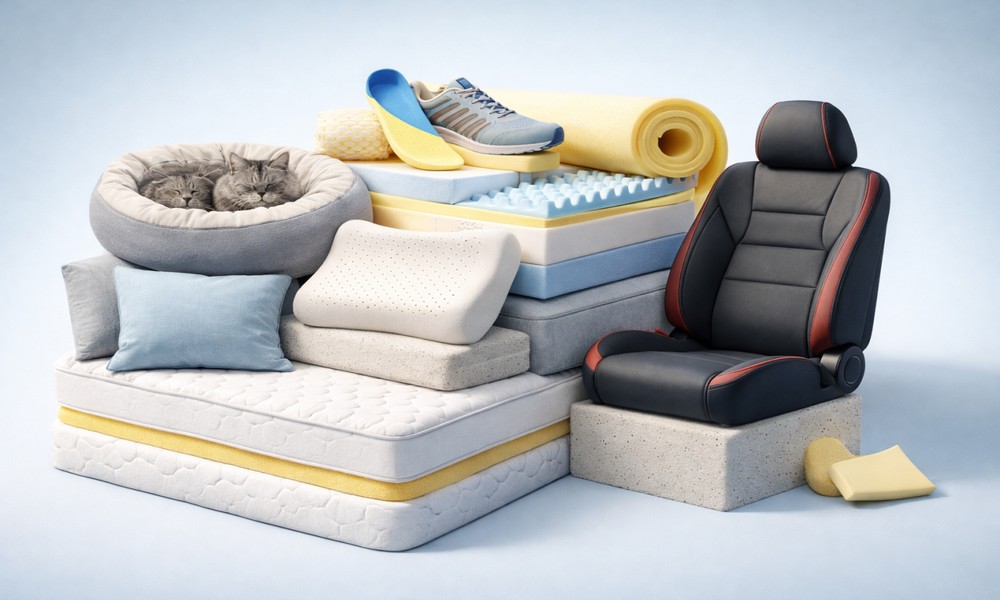
Polyurethane is widely used in many furniture and bedding products. It appears in both visible comfort layers and internal support parts.
Common applications include:
- Sofas and couch cushions
- Mattresses and mattress toppers
- Pillows and headrests
- Armrests and backrests
- Office chairs and seat cushions
- Decorative molded parts
Each product uses polyurethane in a slightly different way. Sofas need balanced comfort and support, while pillows and mattresses often require more pressure relief and ergonomic performance.
Why Polyurethane Is So Popular in Furniture Manufacturing
1. Excellent comfort and support
Polyurethane foam offers soft, supportive comfort. It can be adjusted for different firmness, rebound, and body support, making it suitable for both standard and premium furniture products.
2. Flexible density and hardness options
Polyurethane can be produced in different densities and hardness levels. This helps manufacturers match foam performance to different comfort, support, and market requirements.
3. Strong design freedom
Polyurethane can be cut, molded, and shaped into many forms. It is ideal for sofas, ergonomic chairs, and other furniture parts with customized designs.
4. Efficient for mass production
Polyurethane works well in large-scale manufacturing. It supports both continuous foaming and molded production, helping factories improve consistency and productivity.
5. Cost-effective for manufacturers
Polyurethane provides a good balance between comfort, flexibility, and cost. It helps manufacturers control budgets while supporting stable, scalable production.
Polyurethane Foam vs Traditional Furniture Materials
Furniture manufacturers often compare polyurethane with fiber filling, latex, and spring-based materials. Each option has value, but polyurethane remains one of the most adaptable choices.
Key comparison points:
- Comfort performance
- Support and rebound
- Shape flexibility
- Production efficiency
- Cost control
- Suitability for mass production
Polyurethane Compared With Common Furniture Materials
|
Material |
Main Strength |
Main Limitation |
Common Use |
|---|---|---|---|
|
Polyurethane foam |
Flexible, supportive, easy to process |
Performance depends on formulation |
Cushions, mattresses, pillows |
|
Fiber fill |
Soft and lightweight |
Less structural support |
Back cushions, filling layers |
|
Latex |
Good resilience and comfort |
Higher cost in many cases |
Premium bedding and cushions |
|
Springs |
Strong support core |
Needs extra comfort layers |
Mattresses and seating cores |
Polyurethane stands out because it combines shaping ability, comfort, and production convenience. It fits both standard furniture products and more customized designs.
Different Types of Polyurethane Used in Furniture
Different furniture products require different foam types. Polyurethane is not just one material, but a broad family with several useful variations.
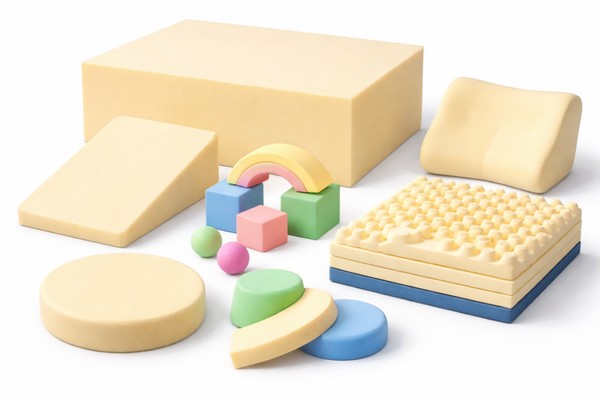
Conventional Flexible Foam
This is widely used in standard sofas, cushions, and mattresses. It is a practical option for large-volume furniture production and everyday comfort products.
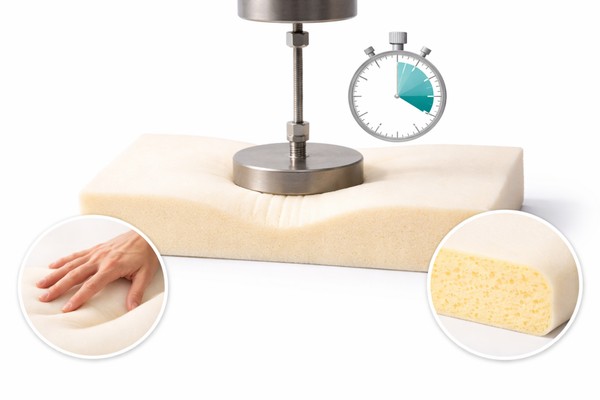
High Resilience Foam
HR foam offers better rebound and support. It is commonly used in higher-end seating, office chairs, and products that need stronger long-term performance.
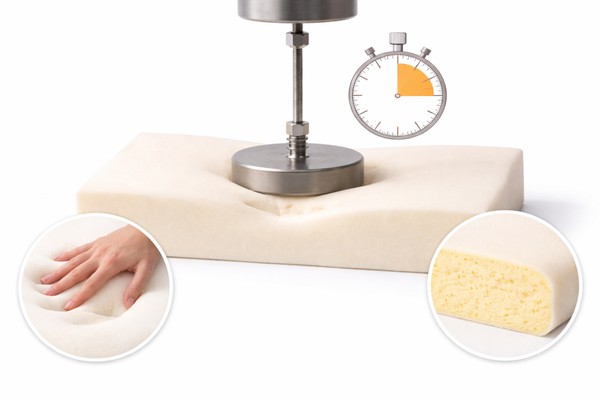
Memory Foam
Memory foam has slow rebound and better pressure distribution. It is widely used in pillows, mattress toppers, and comfort-focused bedding products.
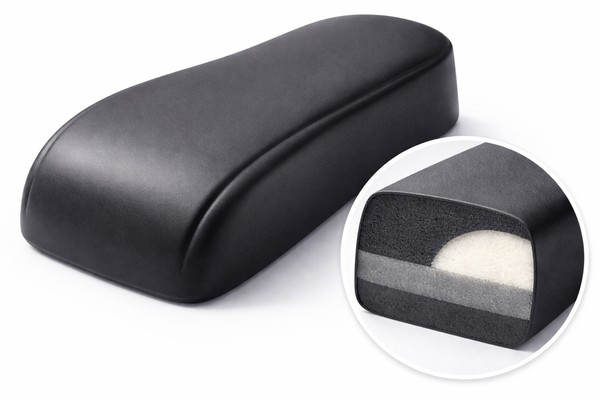
Integral Skin Foam
Integral skin foam has a denser outer layer and a supportive inner core. It is suitable for armrests, shaped support parts, and some decorative furniture components.
Common PU Foam Types in Furniture Manufacturing
|
PU Foam Type |
Main Feature |
Typical Furniture Use |
|---|---|---|
|
Conventional flexible foam |
Balanced comfort and cost |
Sofas, cushions, mattresses |
|
High resilience foam |
Better rebound and support |
Office chairs, premium seating |
|
Memory foam |
Slow rebound and pressure relief |
Pillows, toppers, mattresses |
|
Integral skin foam |
Durable skin and shaped structure |
Armrests, molded parts |
How Polyurethane Furniture Products Are Manufactured
Polyurethane furniture products are usually made by mixing polyol and isocyanate with additives. The material reacts, expands, and cures into foam with the required structure and performance.
The production method depends on the product type. Some products use continuous slabstock foam that is later cut into shapes, while others are made directly in molds.
A typical process may include:
- Raw material preparation
- Metering and mixing
- Foaming or mold filling
- Curing and demolding
- Cutting or trimming
- Covering and assembly
- Final inspection
This process shows why equipment and process control matter. Material accuracy, mold quality, and stable machine performance all influence the final furniture product.
Why Furniture Manufacturers Prefer Complete PU Production Solutions
Many furniture manufacturers prefer not to buy materials and equipment separately. A complete solution can save time, reduce errors, and improve production consistency.
A one-stop supplier can support raw materials, foaming machines, molds, and line planning together. This makes project startup easier, especially for new factories or expanding production lines.
Benefits of one-stop PU solutions:
- Better material and machine matching
- Easier product development
- Faster project implementation
- More stable foam quality
- Simpler after-sales coordination
This model is especially attractive for customers producing sofas, pillows, mattresses, office seating, and molded furniture parts at scale.
Key Factors When Choosing Polyurethane for Furniture Production
Furniture manufacturers should choose polyurethane based on product goals, comfort requirements, and production conditions. One formula does not fit every furniture application.
Important factors include:
- Density requirement
- Hardness and rebound
- Product shape and structure
- Target market and price level
- Production volume
- Equipment compatibility
- Long-term cost control
Choosing the right system helps improve both product quality and manufacturing efficiency. It also reduces waste during development and mass production.
Future Trends of Polyurethane in Furniture Manufacturing
Furniture markets continue to move toward better comfort, more customization, and improved production efficiency. Polyurethane is well positioned to support all three trends.
Demand is also growing for premium foams such as HR foam and memory foam. At the same time, manufacturers are paying more attention to automation, formulation optimization, and sustainable material development.
This means polyurethane will likely remain a core material in furniture manufacturing. Its wide processing range and adaptable performance make it difficult to replace in modern production.
Polyurethane is widely used in furniture manufacturing because it offers comfort, design flexibility, and efficient production. It is not just a foam material, but a practical solution for different products and market needs.