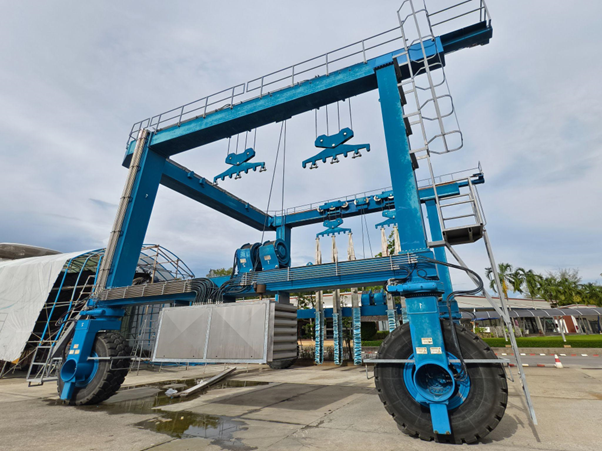

In industrial and construction environments, cranes are crucial for safely and efficiently moving heavy materials. Two popular types of lifting systems used across warehouses, factories, and production lines are the hoist crane and the monorail crane. While both serve the purpose of lifting and transporting loads, they differ in design, function, and application. Knowing these differences enables businesses to select the most suitable equipment for their operations, ensuring safe and effective handling.
Design and Structure: How Each System Works
A hoist crane is typically built for vertical lifting with a drum or lift-wheel mechanism and a chain or wire rope. Unlike monorail cranes, hoist cranes are stationary, often mounted on a fixed beam or a short-path trolley. Available in electric, pneumatic, or manual models, they excel in spaces where controlled vertical lifting is needed repeatedly, providing superior stability and load control compared to more mobile systems.
A monorail crane, by contrast, operates along a single overhead track that provides horizontal movement of loads, not just vertical lifting. Compared to hoist cranes, monorail cranes offer more flexibility in transporting materials along set facility routes. Frequently seen in manufacturing and assembly lines, monorail cranes enhance workflow by moving items between stations—suited to continuous movement rather than the fixed-point lifting that hoist cranes handle best.
Applications Across Industries
The hoist crane is commonly found in workshops, warehouses, and repair facilities. Its ability to lift heavy loads straight up and down makes it suitable for equipment maintenance, part assembly, or storage operations. Many industries prefer electric hoists for their efficiency and control, especially in environments requiring precision, such as automotive manufacturing or mechanical assembly.
In contrast, the monorail crane excels in production or assembly lines where items must travel a set path. Unlike hoist cranes, which lift vertically, monorail cranes are widely used in aerospace, electronics, and logistics to improve workflow by reducing manual labor along complex routes. Their installation on ceilings, beams, or custom tracks provides unique adaptability for large facilities, better suiting them to environments needing seamless horizontal movement across multiple work areas.
Load Capacity and Performance Differences
When comparing the two, hoist cranes generally have higher lifting capacities than monorail cranes. They are designed to handle substantial vertical loads, making them ideal for applications that require strength over distance. Heavy-duty electric or wire rope hoists can lift several tonnes, depending on their design and configuration. Because of their straightforward operation, hoist cranes are easier to maintain and often more cost-effective for vertical lifting tasks.
A monorail crane, on the other hand, prioritises mobility over raw lifting power. While its load capacity is typically lower, its advantage lies in its ability to transport materials across a facility efficiently. For light to medium loads, monorail cranes reduce handling time and improve productivity. The track design can also be customised to suit specific production layouts, ensuring smooth transitions and consistent performance across stations.
Installation and Maintenance Considerations
Installing a hoist crane is generally simpler, as it requires minimal structural modifications. Most hoist systems can be mounted on existing beams or gantries, depending on the operational space. Their compact design and ease of use make them suitable for smaller workshops or temporary setups. Regular inspection of the hoist rope, brakes, and motor ensures optimal safety and performance.
Conversely, installing a monorail crane requires a more detailed setup due to its track system. It demands careful alignment and sufficient ceiling height to ensure smooth travel along the rail. However, once installed, maintenance is straightforward and predictable. Partnering with a reliable supplier ensures professional installation and access to spare parts, reducing the likelihood of system downtime.
Choosing the Right Crane for Your Needs
Selecting between a hoist crane and a monorail crane depends on your operational requirements. If your tasks involve primarily vertical lifting of heavy materials, a hoist crane offers greater power and stability. However, if your workflow involves moving loads horizontally across workstations, a monorail crane provides flexibility and efficiency. Consulting with an experienced crane supplier helps determine which system best suits your facility layout, budget, and performance needs.
Conclusion
Both hoist cranes and monorail cranes are valuable in industrial operations, each with its strengths and specialisations. Understanding their key differences in structure, capacity, and functionality helps businesses make informed decisions for their lifting needs. Partnering with a trusted crane supplier ensures professional advice, reliable installation, and long-term support.
Need expert advice on choosing between a hoist crane or a monorail crane? Contact Shin Guan today for professional recommendations and customised lifting solutions.