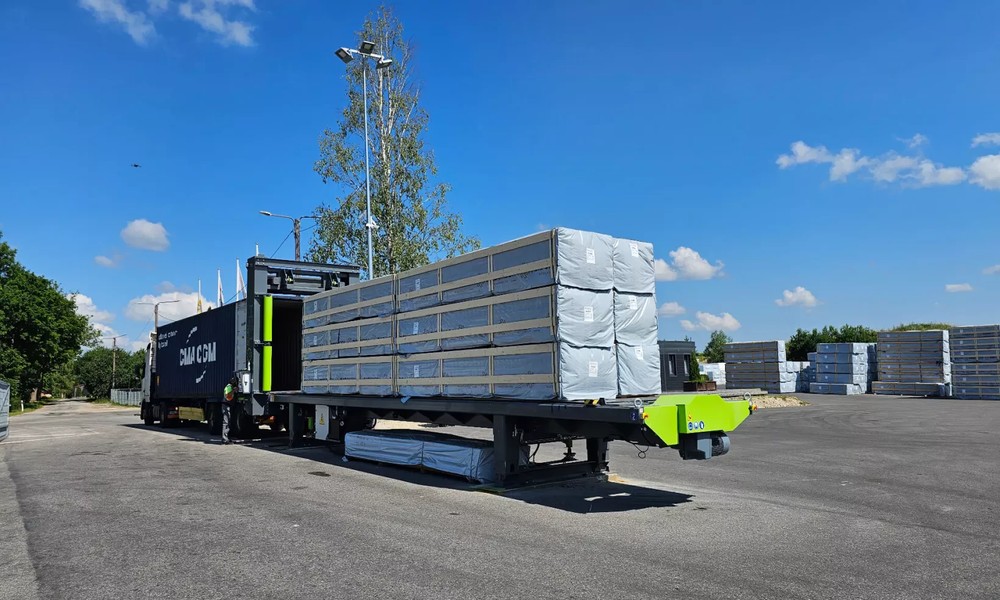

As warehouse automation continues to evolve, more businesses are investing in container loading systems to improve efficiency, reduce labor costs, and accelerate logistics operations. However, selecting the appropriate system requires a thorough assessment of warehouse requirements, product categories, and operational objectives.
The ideal container loading solution should not only increase productivity but also provide flexibility, reliability, and long-term value for your business.
Understand Your Warehouse Requirements
Before selecting a container loading system, businesses should first analyze their warehouse operations. Different warehouses handle different product sizes, packaging types, loading frequencies, and throughput demands.
Important questions to consider include:
- What types of products are being loaded?
- Are the products cartons, bags, pallets, or irregular items?
- How many containers are loaded daily?
- What is the average container loading time?
- Is labor shortage a major issue?
- How much warehouse space is available?
Evaluate Product Types and Packaging
The nature of the cargo being handled is a key factor when selecting a container loading system. For instance:
- Carton loading may require robotic arms with vacuum grippers
- Bagged materials may need clamp-style handling systems
- Heavy industrial products may require conveyor-assisted loading equipment
- Mixed-size cartons may benefit from AI vision-guided robotic systems
If your warehouse frequently handles irregular or mixed products, advanced automation technologies with intelligent sensing and adaptive gripping capabilities can significantly improve loading accuracy and efficiency.
Consider Automation Level
Container loading systems come in various automation levels, from semi-automatic setups to fully automated robotic solutions.
Semi-automatic systems usually require some operator involvement, while fully automated systems can complete loading tasks with minimal human intervention.
Businesses with high shipping volumes often benefit from fully automated systems because they offer:
- Faster loading speeds
- Reduced labor dependency
- Consistent operational performance
- Improved loading accuracy
- Better scalability for future growth
Many companies also integrate loading systems with a Container Unloading Robot to create a complete automated material handling workflow for inbound and outbound logistics.
Focus on Loading Efficiency
Loading speed directly impacts warehouse productivity and transportation efficiency. A slow loading process can increase truck waiting times, reduce dock utilization, and create operational bottlenecks.
When evaluating a container loading system, businesses should pay attention to:
- Average loading cycle time
- Maximum throughput capacity
- Conveyor integration capabilities
- Continuous operation performance
- Downtime and maintenance requirements
High-efficiency systems help warehouses process more shipments while reducing operational delays.
Prioritize Workplace Safety
Manual container loading often involves repetitive lifting, bending, and physically demanding tasks. These activities can increase the risk of worker fatigue and injuries.
Automated loading systems help improve workplace safety by reducing direct human involvement in heavy loading operations. Modern systems are typically equipped with safety sensors, emergency stop functions, and intelligent collision prevention technologies.
By improving safety conditions, businesses can reduce injury-related costs and create a more stable working environment.
Evaluate Space and Layout Compatibility
Warehouse layout plays an important role in selecting the right container loading solution. Some robotic systems require larger installation areas, while compact conveyor-based systems are better suited for facilities with limited space.
Before investing in equipment, businesses should evaluate:
- Available floor space
- Container dock positions
- Conveyor routing requirements
- Ceiling height limitations
- Existing warehouse automation infrastructure
Flexible and modular systems are often ideal because they can adapt to future warehouse expansions or operational changes.
Integration with Existing Automation Systems
Modern warehouses increasingly rely on interconnected automation technologies. Choosing a container loading system that integrates easily with existing warehouse management systems, conveyors, AGVs, palletizers, and robotic equipment can greatly improve operational efficiency.
For example, some facilities combine automated loading solutions with a Container Unloading Robot to create a seamless logistics process from inbound unloading to outbound shipping.
Integrated systems also provide better operational visibility through real-time monitoring and data analysis.
Consider Maintenance and Technical Support
Long-term reliability of equipment is essential for warehouse operations. Businesses should evaluate the supplier’s after-sales support, spare parts availability, and maintenance services before making a purchase decision.
Key factors include:
- Technical support response time
- Preventive maintenance programs
- Operator training services
- Remote troubleshooting capabilities
- Spare parts inventory availability
Reliable support helps minimize downtime and ensures stable long-term performance.
Analyze Total Cost and ROI
While initial investment costs are important, businesses should focus on the total long-term value of the system rather than only the purchase price.
An efficient container loading system can generate significant savings through:
In many cases, the return on investment can be achieved within a relatively short period, especially for high-volume logistics operations.
Conclusion
Choosing the right container loading system requires a careful balance between operational needs, warehouse layout, automation goals, and budget considerations. Businesses should prioritize efficiency, flexibility, safety, and integration capabilities when evaluating different solutions.
As warehouse automation continues to advance, intelligent loading technologies will play an increasingly important role in improving logistics performance and supply chain efficiency. By selecting the right system, companies can build a smarter, safer, and more productive warehouse operation for the future.