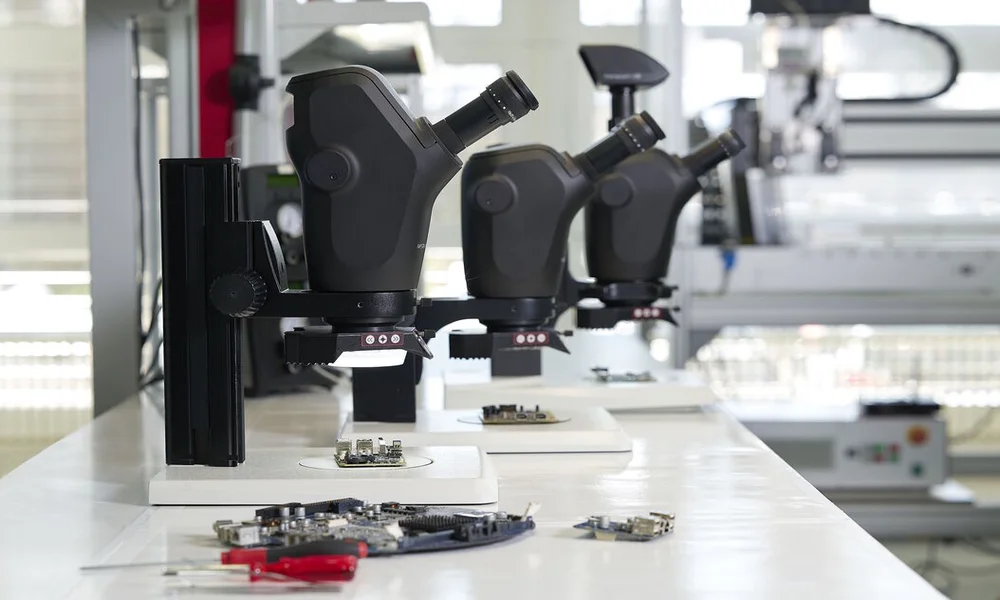

Manufacturing quality depends on accurate checks at every production stage. Small defects can affect product strength or reduce performance. An inspection microscope helps teams examine fine details with greater clarity. The right equipment supports reliable checks while saving valuable production time. Selecting suitable equipment begins with understanding product needs. A microscope manufacturer malaysia can help identify suitable options for manufacturing quality requirements.
Which Features Support Accurate Inspection?
Clear images help inspectors identify small flaws during routine checks. Magnification should match the size of the parts under review. Higher magnification alone does not guarantee better inspection results.
Resolution determines how clearly fine details can be seen. Lighting also affects the visibility of surface marks. Adjustable brightness helps reveal different textures across various components. These features support dependable quality checks throughout production.
Useful features include:
- Adjustable magnification helps inspect parts of different sizes.
- Clear imaging reveals tiny marks across complex surfaces.
- Flexible lighting improves visibility during detailed examination.
- Stable focusing supports consistent results across repeated inspections.
- Simple controls help operators complete checks with greater accuracy.
What Inspection Tasks Matter Most?
Every manufacturing process has distinct quality requirements. Some parts need surface checks while others require dimensional measurements. Understanding these needs helps teams select suitable equipment.
An inspection microscope should match the materials being examined. Metal components may require strong lighting to reveal fine marks. Electronic parts often need clear views of small connections.
Teams should consider these inspection tasks:
- Surface checks identify scratches or uneven finishing.
- Dimensional reviews help verify component size.
- Assembly checks reveal gaps between connected parts.
- Printed circuit checks support accurate connection reviews.
- Production sampling helps maintain consistent quality standards.
How Can Measurement Needs Guide Selection?
Measurement requirements influence the equipment chosen for manufacturing checks. Some tasks involve comparing dimensions against set limits. Others require checking alignment or confirming part spacing.
Digital measurement tools can simplify these checks. Calibrated scales support consistent readings during routine inspections. Software may also help store results for future reviews.
A microscope manufacturer malaysia can explain which measurement features suit particular production tasks. Teams should confirm that the chosen system supports their required accuracy.
What Should Operators Consider Daily?
Daily inspection work depends on ease of use. Operators need controls that feel familiar during repeated checks. A clear display can reduce strain during longer inspection sessions.
Equipment should also fit available workspace conditions. Stable mounting helps maintain consistent views during examination. Regular cleaning keeps lenses clear while supporting dependable image quality.
Manufacturing teams can improve inspection results by matching equipment features with actual production demands. A clear selection process supports accurate checks without adding unnecessary complexity. Reviewing image quality, measurement needs, and operator requirements helps identify suitable equipment. Careful planning also supports consistent results across production batches. A well-matched inspection system becomes a dependable part of quality control.
FAQ
What magnification level suits small manufacturing components?
Select magnification according to component size and inspection requirements.
Can lighting affect inspection accuracy during production checks?
Yes, suitable lighting reveals surface details with greater clarity.
Why should measurement tools match manufacturing requirements?
Matching tools support reliable readings and consistent product quality.